

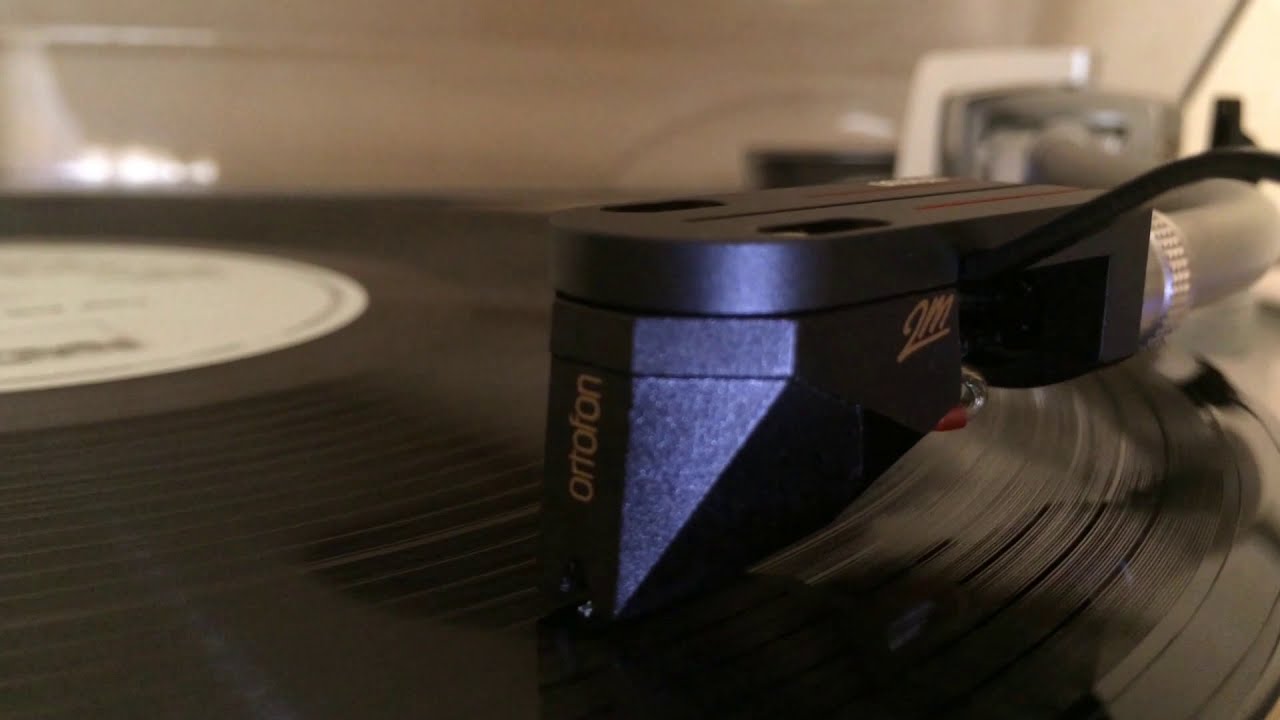
 Something that's often forgot about is that parts of a sound system can start to resonate on frequencies below the human hearing, but can be heard as a higher frequency distortion nevertheless.
 One of the most sensitive parts in a system is the turntable tonearm, when it comes to resonance.
Tonearms are long and thin, making it an ideal shape for a resonator and the cartridge attached is sensitive to pick up vibrations.
Tonearm resonance is unavoidable, but the frequency should ideally be between 8Hz and 12Hz, so that it has the lowest impact on your sound quality.
In the video the cartridge starts shaking visibly around 7Hz and stops shaking around 13Hz.
The best way to measure it's resonance frequency is by recording it and using some software to look at the results, like Audacity.
For best accuracy, you need a test record with a resonance test on it, but recording needle drops can also be used as alternative. Needle drops aren't that reliable though and can only be used as an indication.
When the resonance frequency is not within the optimal range of 8 to 12Hz, it can be adjusted by changing the mass of the headshell or tonearm.
Most of the times, this means that the headshell needs to be swapped out with another one if it has to be lighter. Only a few headshells have removable weights (like the classic silver Technics headshells).
If the heashell is too light, it's much easier. It can be solved by simply adding metal shim between the cartridge and headshell. Raise the tonearm height accordingly.
Used for this test:
Cartridge: Ortofon 2M Black
Headshell: Ortofon LH-6000


0 Comments